
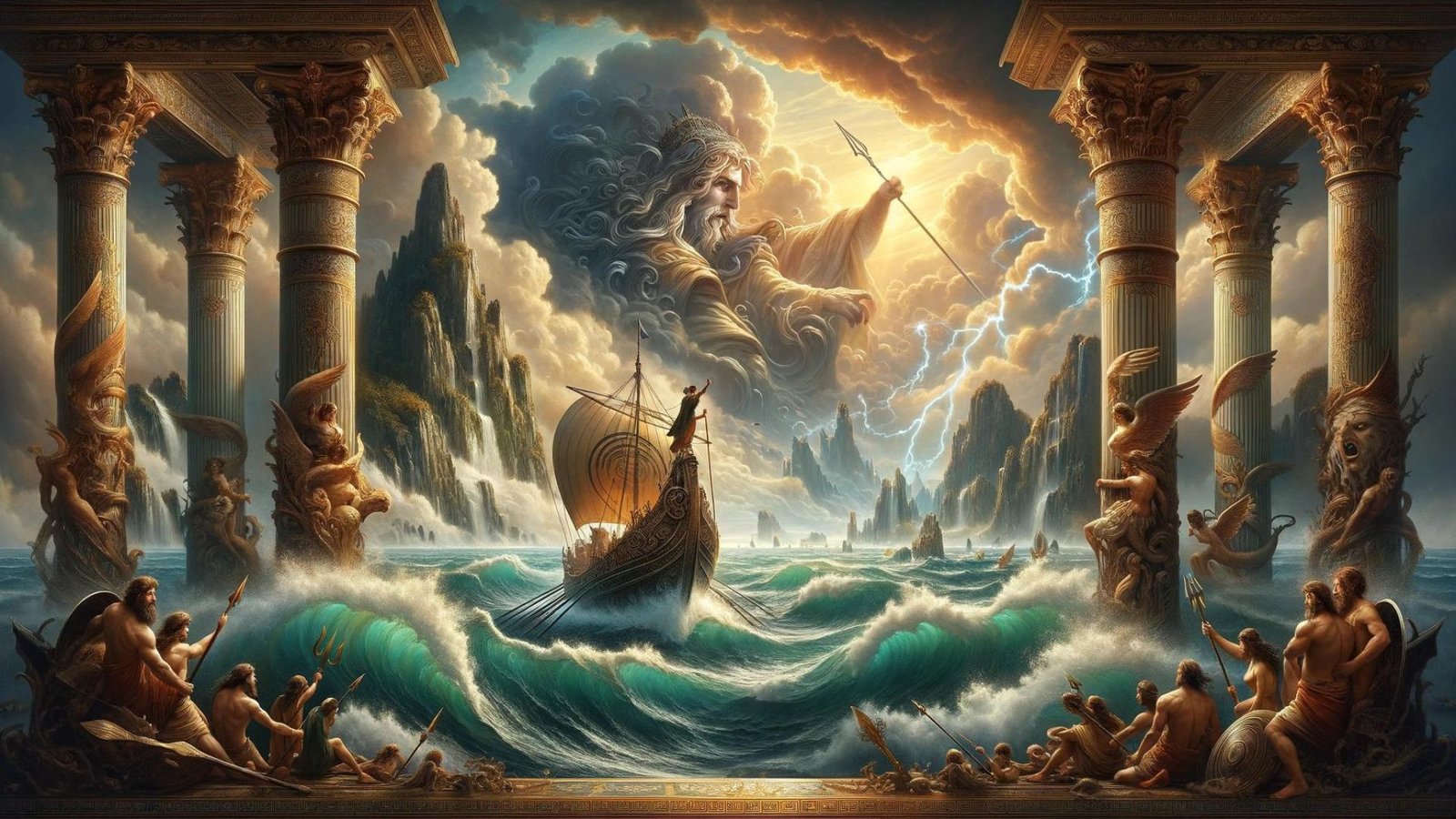
The Odyssey opens with Zeus, king of the gods, genuinely exasperated. Mortals, he complains, are always blaming the gods for their troubles, when most of their suffering comes from their own recklessness. He has a point, and a specific example in mind: Aegisthus, who knew exactly what would happen if he murdered Agamemnon and pursued his wife anyway, then acted surprised when the consequences arrived.
“Ah how shameless – the way these mortals blame the gods. From us alone, they say, come all their miseries. Yes, but they themselves, with their own reckless ways, compound their pains beyond their proper share...”
Homer, The Odyssey, p78
The gods, in Zeus's telling, get blamed for an enormous amount of damage that mortals did perfectly well on their own. It is a strange place to open an epic about a hero's journey home, with the king of the gods complaining about being scapegoated. But it sets up something that runs through the whole story:
Odysseus's men ignore his direct instructions and eat the cattle of the sun god, then act shocked when they are punished for it. His crew open the bag of winds out of greed and blow themselves back to where they started, then grieve their bad luck. Over and over, the Odyssey asks the same question: how much of what happens to us is genuinely beyond our control, and how much is a decision we made and would rather not own?
I hear a version of this question in many organisations I work with, the Gods just have different names: The market. The algorithm. Head office. Now, increasingly, AI.
It is a real temptation, and not always an unreasonable one, because plenty of what affects a business genuinely is beyond any one person's control. But "the market shifted" and "we didn't adapt fast enough" are often descriptions of the same event, told from two different distances from responsibility. One keeps you looking outward. The other asks something harder of you.
The skill here isn't learning to take all the blame, that's its own kind of distortion, and usually just as unhelpful as taking none. Some leaders genuinely do shoulder too much, treating every market downturn or competitor move as a personal failure, which burns people out and misreads what was actually theirs to control. The Odyssey isn't arguing for guilt (and this is just one example of where the Nolan film and I part ways). It's arguing for accuracy. Zeus isn't saying mortals are always at fault. He's saying they are at fault more often than they admit, and that the stories we tell about why things went wrong are rarely neutral.
What's the story you tell yourself when a plan goes awry? It's worth noticing which version you reach for first, the one where the current was against you, or the one where you misread the chart. Most of us have a default, and most of us picked it a long time ago, for reasons that had very little to do with accuracy...
This is just one of the themes I explore in my Odyssey programme for Leaders. Come for a free introductory evening on the 4 November in Shoreditch, The Odyssey: Nobody Trained Us for What Was to Come. Come for the story, stay for the conversation, leave with a few new questions for work.