
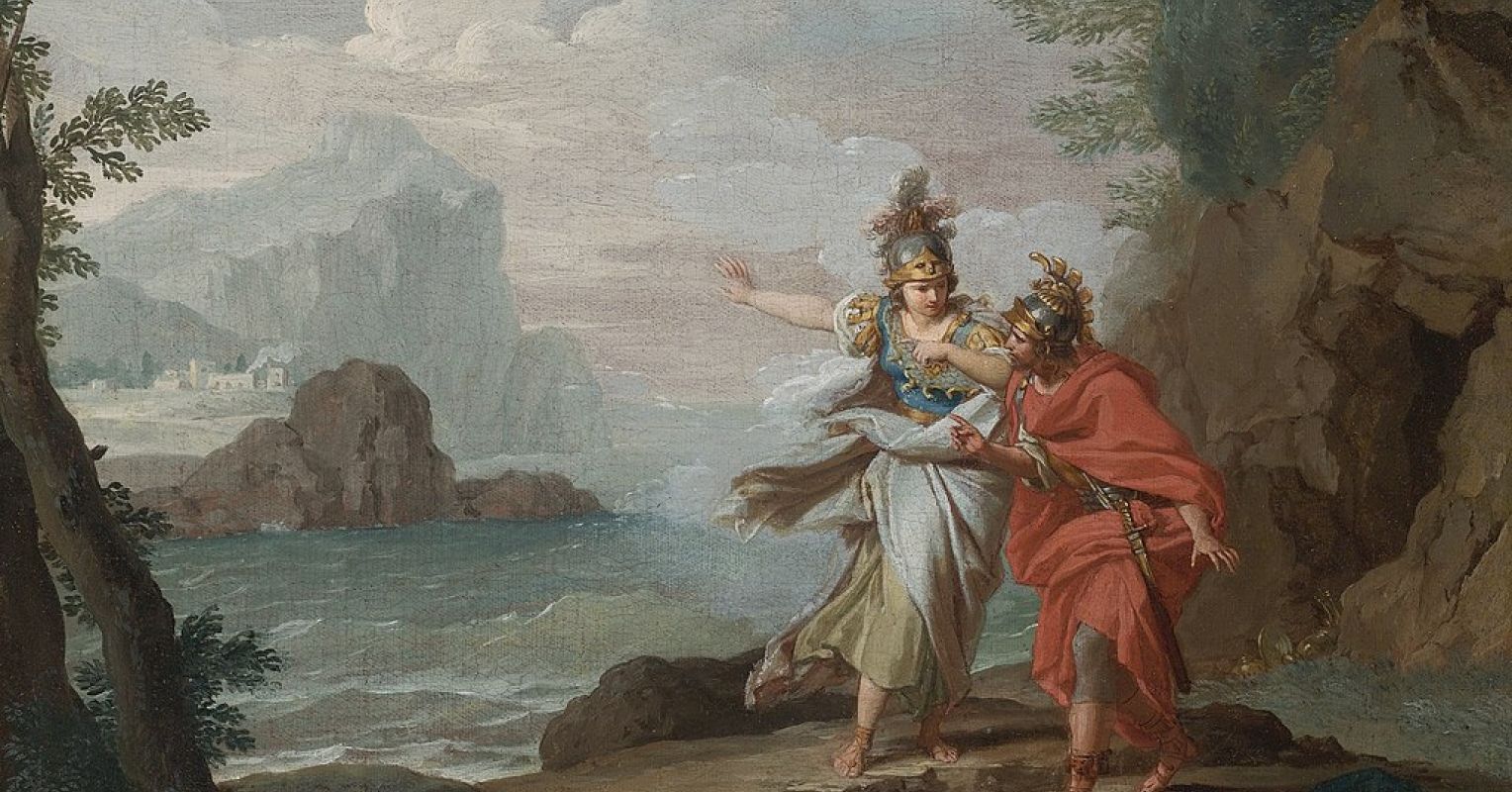
Ithaca is a small, rocky island. Homer doesn't dress it up.
“Mine is a rugged land but good for raising sons – And I myself, I know no sweeter sight on earth Than a man's own native country.”
Homer, The Odyssey, p212
It's not paradise. And Odysseus leaves behind at least one genuine paradise to get back there. Not only that, Calypso offers him immortality and a life without hardship if he'll simply stay with her.
He says no.
“Look at my wise Penelope. She falls far short of you, Your beauty, stature. She is mortal after all And you, you never age or die... Nevertheless I long – I pine, all my days – To travel home and see the dawn of my return.”
Homer, The Odyssey, p159
He chooses the rocky island, the ageing wife, the son he barely knows, over eternity in comfort. For ten years, through the Cyclops, the Sirens, the might of Charybdis, the Underworld, a ship full of men who keep making things worse, Ithaca is the one fixed point. Not because it's extraordinary. Because it's his.
That distinction matters more than you might expect. Ithaca works as a destination precisely because it isn't dressed up as something it's not. Odysseus isn't sailing toward an idea of perfection. He's sailing toward a specific, unremarkable, deeply known place that happens to be where he belongs. The pull of it is real. It matters precisely because it is not abstract.
I see a lot of leaders and teams operating without anything like this commitment. I am not talking about Goals, most organisations have no shortage of goals; targets; quarterly numbers; five year visions. But a target and an Ithaca are not the same thing. A target tells you where to stop. An Ithaca tells you why any of the stopping points along the way matter. Without it, a difficult quarter is a difficult quarter, demoralising on its own terms. With it, a difficult quarter is one more strait to get through on the way somewhere that actually means something.
The Odyssey is honest about how hard this is to hold onto. Odysseus's own crew lose sight of Ithaca constantly, literally, when they open the bag of winds within sight of home and get blown straight back out to sea, and figuratively, when the Lotus Eaters offer them a plant that makes them forget they ever wanted to leave at all. Forgetting your Ithaca doesn't usually look dramatic. It looks like comfort. That's why Odysseus spent seven years with the nymph Calypso... It looks like a good enough reason to stay one more day. The Lotus Eaters aren't a monster to fight. They're an invitation to stop wanting the thing you wanted.
What's your Ithaca right now? Not your quarterly target, and not some polished vision statement built for a slide. The actual, specific, possibly unremarkable thing that makes the hard parts of this year worth doing. If you can't answer that quickly, that's worth sitting with. Leaders navigating real change rarely lose the plot from lack of effort. They lose it from losing sight of what they were steering toward in the first place.
This is just one of the themes I explore in my Odyssey programme for Leaders. Come for a free introductory evening on the 4 November in Shoreditch, The Odyssey: Nobody Trained Us for What Was to Come. Come for the story, stay for the conversation, leave with a few new questions for work.